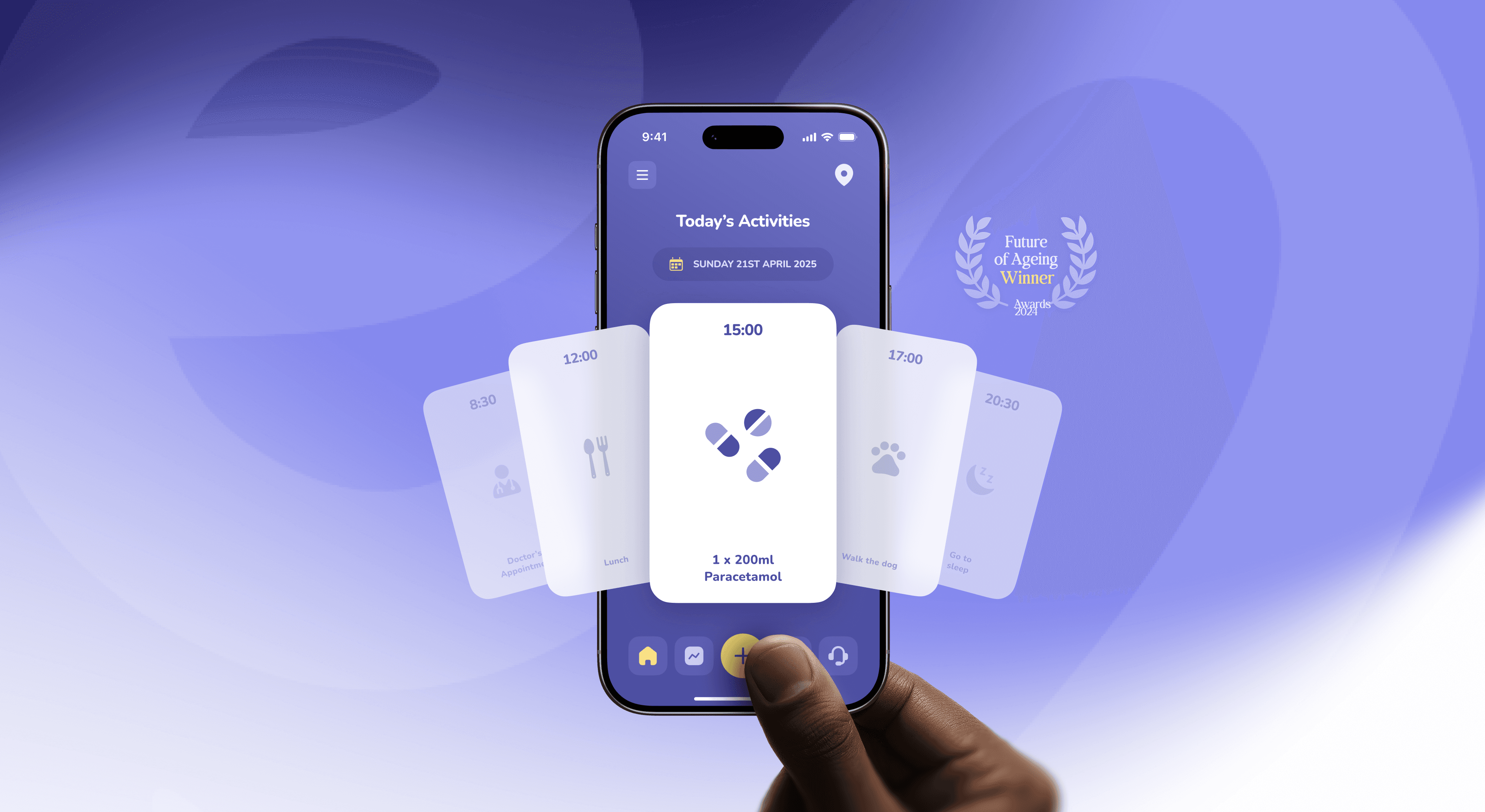
Tech for older adults that isn’t a pill box
How to design apps for older adults that are accessible and dignified, not patronising. Principles, a swap table and lessons from the Elli Cares app.
7 May 2026
A €60/hr freelancer can cost more than a €130/hr studio. The napkin maths on hidden costs and reworks, and when a freelancer is the right call.

Founders compare a freelancer's €60/hr to a studio's €130/hr and pick the cheaper number. Here's the math that explains why, three projects in, they almost always end up paying twice. With real numbers from real reworks we've inherited.
A €60/hr designer who takes 3x longer and ships 70% of the work isn't cheaper. They're 2.4x more expensive. Here's the napkin math.
A €60-an-hour freelancer who takes three times as long and ships seventy percent of the work isn't cheaper than a €130-an-hour studio.
They're 2.4x more expensive.
We've inherited the napkin to prove it three times in the last eighteen months. Every founder we talk to has done some version of this comparison. Studio quote: €30,000. Freelancer quote: €12,000. The freelancer wins on the spreadsheet. Six months later, we're rebuilding their work and the total is €38,000 and counting. This isn't us being smug. We've made the same mistake hiring contractors for our own back office. The headline rate is a trap that almost everyone falls into. Here's why.
The freelancer rate is the only number you can compare apples-to-apples on. So that's the number you compare. The problem is that almost nothing else about the two engagements is actually comparable.
A studio rate includes scope management, QA review, design system thinking, edge-case discovery, project ownership, and the absorbed cost of the senior person who'll show up when something breaks at 11pm before launch.
A freelancer rate includes the freelancer, billing in 15-minute increments. This is not the freelancer's fault. They quoted you for what you asked for. You just didn't ask for any of those other things, because you didn't know yet that you needed them.
Here's the honest list, from inheriting three reworks in eighteen months:
You said "redesign the dashboard." A studio asks fourteen questions before quoting. A freelancer asks two and starts. The other twelve come up later, mid-project, and they're billable when they do.
What happens with no data? Too much data? A user on Safari from a small Spanish town with a 3G connection? A studio handles forty-three of these by default. A freelancer handles the three you specified.
A button that lives in three places needs to live in a design system, not in three Figma files. A studio builds the system. A freelancer ships three buttons.
A second pair of senior eyes catches what the first set missed. A studio has this baked in. A freelancer is one set of eyes, and they're tired of looking at their own work.
When the launch breaks, who fixes it? A studio carries that risk on retainer. A freelancer is on holiday in Portugal until Tuesday.
Coordinating with engineering, briefing the next round, managing client feedback. Four hours a week, every week. With a freelancer, that's your time. If you assign rough numbers to those six things, you arrive at the actual cost-per-hour comparison: a freelancer who looks like €60/hr is closer to €120/hr by the time you've absorbed the absent overhead. Sometimes higher.
We can't share names, but we can share the structure of one we inherited last year. Series A SaaS, dashboard product, US-based.
€60/hr freelancer in Eastern Europe.
Quoted 200 hours.
Final invoice 340 hours.
Paid: €20,400.
A pixel-perfect Figma file of forty screens.
ⓧ No design system.
ⓧ No mobile.
ⓧ No empty/error/loading states.
Three of the screens didn't reflect the actual data the engineering team was returning.
Two months of engineering rework when half the screens turned out not to be buildable as drawn.
Engineering cost: ~€38,000 in salary at burn rate.
€130/hr studio rate, 120 hours over three weeks.
Built the system, fixed the screens, documented for engineering.
Cost: €15,600.
The freelancer didn't fail. The freelancer delivered exactly what was asked for. The founder failed to ask for the other 70% of the project, because the freelancer's quote made the other 70% sound optional.
This isn't an anti-freelancer post. We hire freelancers for our own back office. There are three situations where a freelancer is genuinely the right answer:
If you have a design system, a senior in-house designer, and a clear ticket, a freelancer executes faster than a studio because they don't need to spool up.
A landing page redesign, a brand refresh, a single new feature mock. If it's under €5K of work and it doesn't connect to ten other surfaces, freelance is fine.
Your in-house team is at 90% utilization and one project needs an extra pair of hands for two weeks. Freelance. If the project is "redesign the product" or "build us a brand" or "get us ready for Series B", that's not a freelancer job. That's a studio job, full stop.
Before you take the cheaper quote, run this five-minute audit:
1. Read both quotes. Strike out everything that's a deliverable. What's left? That's your scope discovery, ownership, and risk mitigation. The freelancer probably has nothing in this column.
2. Add a "what's not in this quote" line for each. Force both to fill it in honestly. The freelancer's list will be longer.
3. Multiply the freelancer's hours by 1.5x. That's the realistic delivery time, not the optimistic one.
4. Add 15% of project cost as a "missing scope" buffer. You'll spend it.
5. Compare the totals. If the studio is still 30%+ more expensive, go freelance. If they're within 15%, go studio. The math matters. But the bigger question to ask yourself is: am I optimising for cost, or am I optimising for "this gets done and I never have to think about it again"? Those are very different problems with very different answers.
Cheap is expensive when the project drifts. Studio is expensive when the project is already nailed down. Most founders mis-classify their project: they think it's nailed down when it isn't. If you're not sure which side of the line your project sits on, that uncertainty IS the answer. Go studio. Or at least book a free consultation with one before signing the freelance contract.
A: On the headline rate, yes. On total project cost, often no. A studio rate includes scope discovery, QA, system thinking, and ownership that freelancers price separately or skip. The realistic comparison is usually within 20% once you account for rework risk.
A: Three situations: (1) when scope is already locked down and you have an in-house designer reviewing the work, (2) when the project is genuinely small and self-contained, under €5K and no system implications, or (3) when you need overflow capacity for an existing team rather than strategic direction.
A: Most mid-market SaaS engagements with a design studio land between €15K and €60K depending on scope. Brand sprints typically €10 to 25K, full product redesigns €40 to 80K, and ongoing design partnerships €8 to 15K per month on retainer. Always more than the cheapest quote.
A: Beyond portfolio: who reviews their work? What's their process when scope changes mid-project? What's not included in their quote? How do they handle handoff to engineering? If they don't have crisp answers, you'll be the QA, the project manager, and the system-thinker yourself.
A: Yes, regularly. If a project is small, well-scoped, and doesn't need strategic input, we'll tell the founder so directly and sometimes recommend specific freelancers we trust. We'd rather lose a small project than take on the wrong one.
How to design apps for older adults that are accessible and dignified, not patronising. Principles, a swap table and lessons from the Elli Cares app.

Energy investors read a climate deck differently. What they look at first: technology readiness, unit economics, real installs and impact with a method.

Patients want independence, carers want reassurance. How to design one health app that serves both without turning care into surveillance.