UI/UX & Design
Slavena V.
Most Startup Websites Explain Too Much
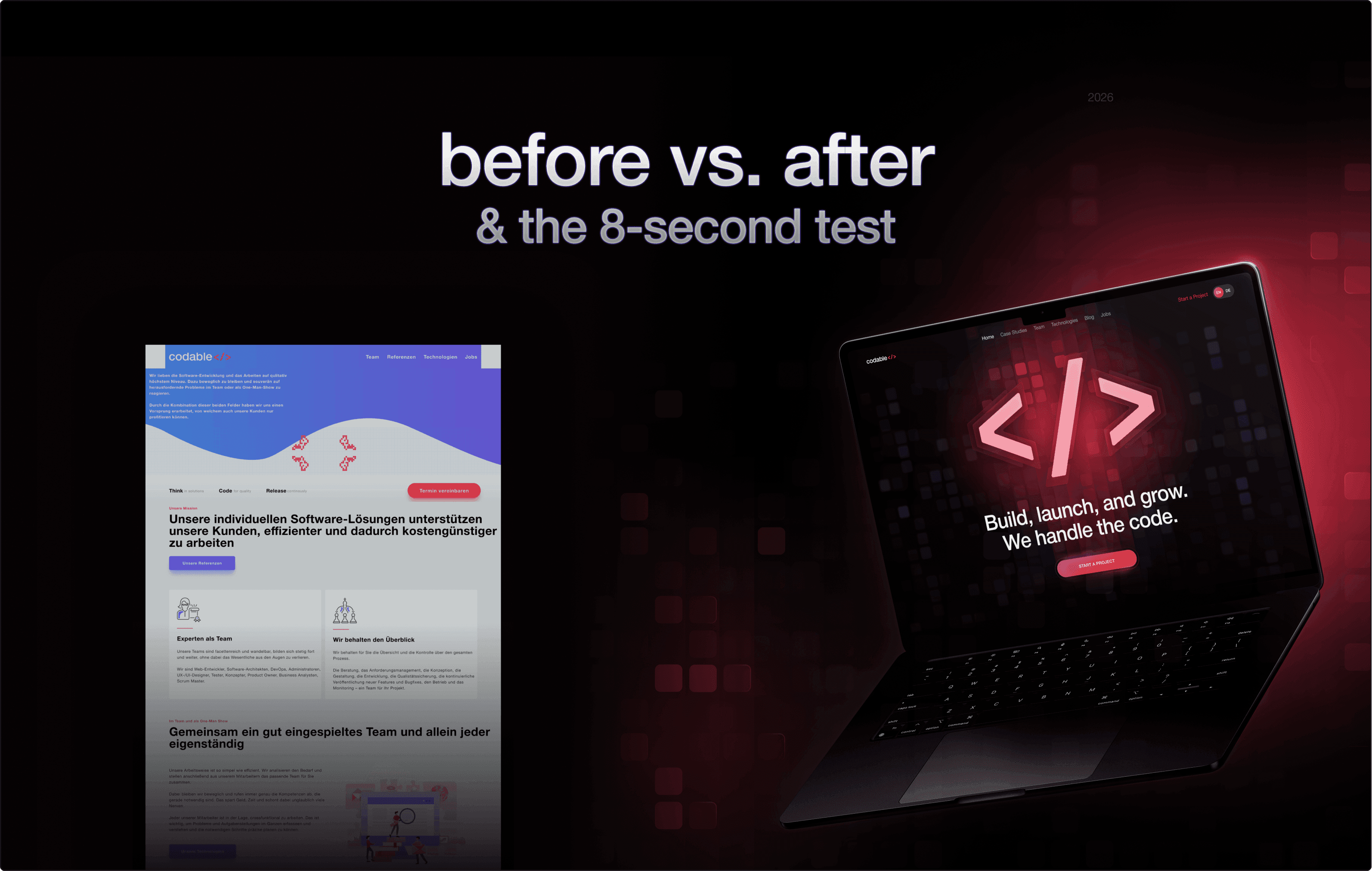
Visitors don't read 45 seconds of context before deciding. They scan 8 to 12 seconds, then lean in or leave. The four cuts that make a hero actually convert: cut the category opener, cut the adjectives, cut the second value prop, cut the founder photo.
Most startup websites explain too much.
Not too poorly. Too much.
Founders worry that visitors won't understand the product, so they pile on context: a paragraph above the fold, three value props, a feature grid, a "how it works" section, a testimonial slab, six logos, and a final CTA the visitor reaches after 45 seconds of scrolling.
Visitors don't read 45 seconds of context before deciding.
They scan eight to twelve seconds, then either lean in or leave.
That's not a flaw in your visitor. It's how attention works online. We unpacked this in the UX psychology behind SaaS success: clarity and cognitive ease beat completeness every single time.
The job of a homepage is not to teach
A homepage has one job: make the right stranger lean in and want the next step.
That's it.
Not "explain the product." Not "list every feature."
Not "tell our story."
Lean in. Want the next step. The product page, the demo, the trial, the sales call.
The 8-second test
Open your homepage in incognito. Set a timer for 8 seconds.
At the end of 8 seconds, can the visitor answer two questions out loud?
1. What does this product do?
2. Who is this for?
If they can't, the hero is broken. No amount of below-the-fold content fixes it.
The four cuts that make a hero work
1. Cut "We are a [category] that helps [audience]…"
Start with the outcome the audience cares about.
2. Cut adjectives.
"Powerful," "intuitive," "modern," "scalable." None of these mean anything to a stranger. Most of them are markers that the team couldn't agree on a sharper word.
3. Cut the second value prop above the fold.
One hook above the fold. Always. The second hook is a feature page's job.
4. Cut the founder photo from the hero.
Save it for the about page. The hero is not where you ask the visitor to trust the team. It's where you ask them to trust the outcome.
A simple rewrite framework
Before:
"We are an AI-powered platform that helps modern marketing teams streamline their workflows and reach new performance levels."
After (one variant):
"Marketing teams replace 3 tools with one. See your pipeline in 4 minutes."
The "after" is not better because it's shorter. It's better because it tells the right stranger exactly what changes if they click.
If you want a wider menu of patterns to rewrite against, we walked through three of the most reliable ones in SaaS website frameworks: AIDA, PAS, BAB. Pick the one that matches where your audience is in their thinking, then cut.
When the homepage explains the right amount
Hero: one sentence about the outcome, for one audience.
Sub-hero: one sentence about the mechanism (how).
Three to five proof signals (customer logos, a metric, a quote. Pick one of the three to lead, not all three at once).
One clear next action (trial / demo / book / read).
That's it. Everything else is product page material.
The websites that convert highest in 2026 read like a confident handshake, not a brochure.
If your homepage feels like it's working harder than it should…
the content is probably doing a feature page's job in a hero's spot.
We run free 5-screen homepage audits for funded startups.
→ Book yours at dtailstudio.com