Tech for older adults that isn’t a pill box
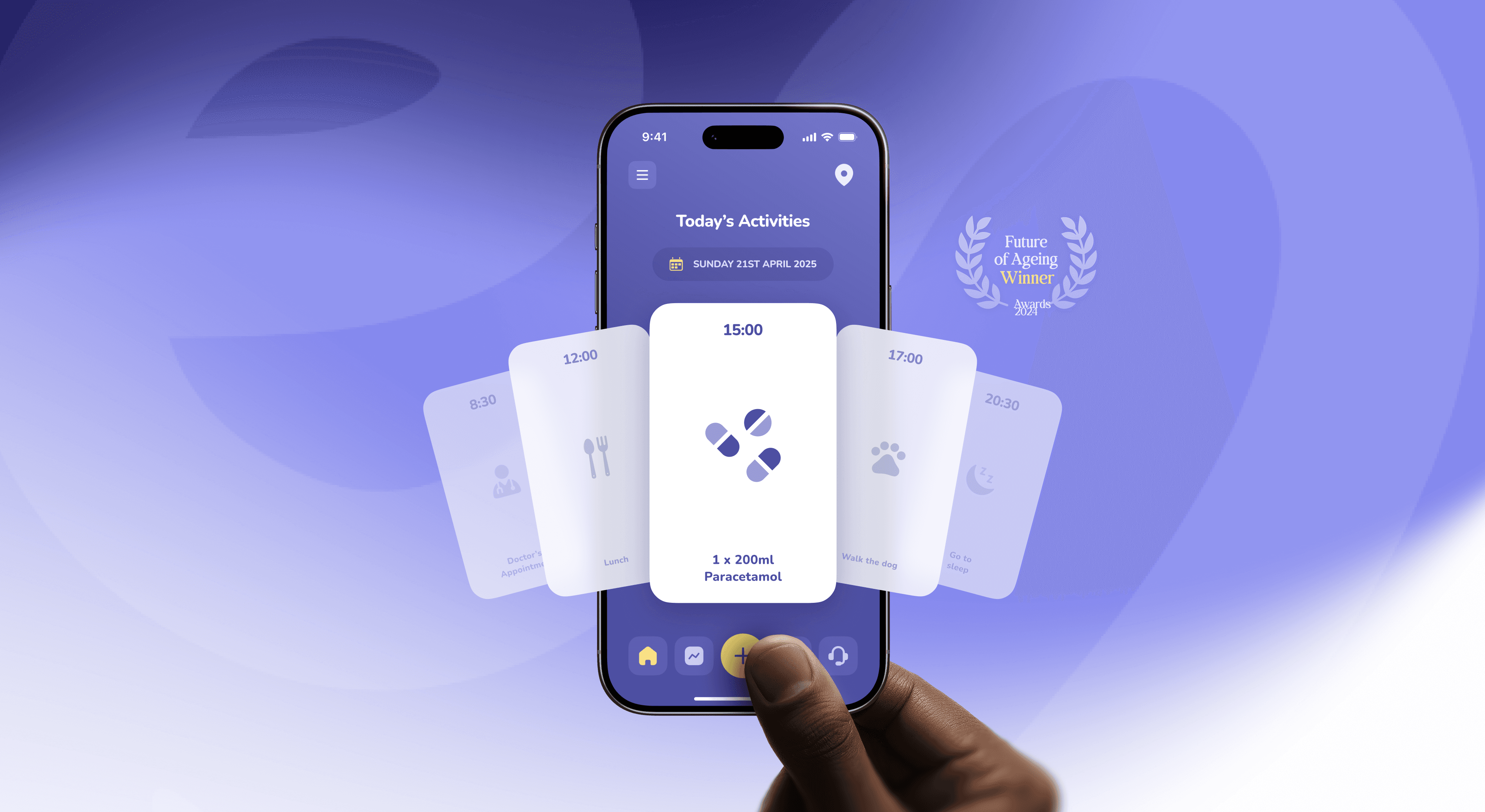
How to design apps for older adults that are accessible and dignified, not patronising. Principles, a swap table and lessons from the Elli Cares app.
30 Apr 2026
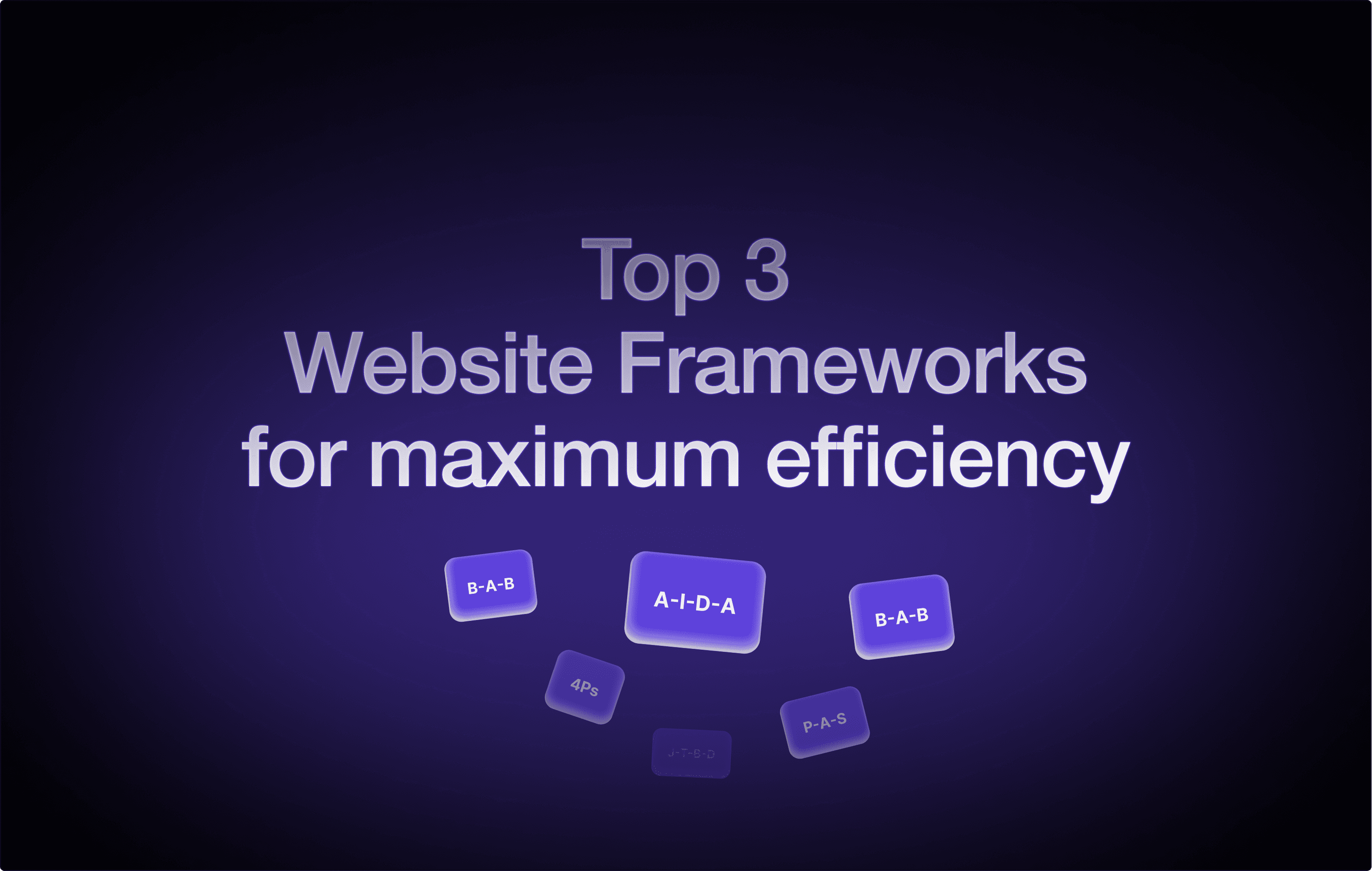
AIDA, PAS, BAB and FAB: the SaaS landing page structures that convert, why they work and how to match each one to the story your product tells.
Most SaaS landing pages today are thoughtfully designed.
They have strong visuals, clear sections, and all the right ingredients: product screenshots, feature lists, testimonials, and CTAs. A lot of care goes into them.
And yet, many still don’t convert as well as they could.
Not because something is missing, but because the story isn’t structured around how people actually process decisions.
A high-converting page doesn’t just show information.
It guides understanding.
When teams build a landing page, they usually start from what they know best: the product.
That often leads to a structure like this:
→ here’s what we built
→ here’s what it does
→ here are the features
→ here’s why it’s good
This is logical from the inside. It reflects how the product was created.
But for someone seeing it for the first time, it requires effort. They have to translate those features into meaning.
Users don’t arrive thinking about your product.
They arrive with a context, a problem, or a goal.
What they’re trying to figure out, quickly, is:
→ Is this relevant to me?
→ Does it solve something I care about?
→ Can I trust it?
→ What should I do next?
If the page doesn’t answer these questions in the right order, even strong products can feel unclear.
Users don’t read pages.
They scan for meaning.
The difference between these two perspectives (product vs user) is where most opportunities sit.
Structure bridges that gap.
Instead of presenting everything you know, it organizes information so that each section naturally leads to the next.
A well-structured landing page:
→ reduces the need to interpret
→ builds understanding step by step
→ makes decisions feel easier
This is where frameworks become useful.
AIDA is one of the most widely used frameworks because it aligns closely with how attention works.
→ Attention → capture relevance quickly
→ Interest → frame what this is about
→ Desire → show why it matters
→ Action → guide the next step
On a landing page, this often translates into:
a headline that speaks to a specific use case
a short explanation that anchors the product
a focused section on outcomes or benefits
a clear, low-friction CTA
Example:
Instead of:
“AI-powered analytics platform”
You might see:
“Understand your product data in minutes, not hours.”
This shifts from description to meaning.
PAS works by connecting directly to a problem the user already recognizes.
→ Problem → name what’s not working
→ Agitation → highlight why it matters
→ Solution → present a clear alternative
What makes PAS effective is specificity.
Example:
Instead of:
“Managing your team’s tasks is complex.”
You get:
“You’re tracking tasks across 4 tools, and still missing deadlines.”
That creates clarity and relevance immediately.
The solution that follows doesn’t feel like a pitch. It feels like a natural next step.
BAB focuses on movement from one state to another.
→ Before → current situation
→ After → desired outcome
→ Bridge → how to get there
This works especially well when the outcome is easy to visualize.
Example:
Before: “Spending hours compiling reports”
After: “Getting clear insights instantly”
Bridge: “A single dashboard that brings everything together”
The strength of BAB is simplicity. It makes the value tangible.
Beyond the common ones, there are a few other structures worth knowing.
FAB (Features → Advantages → Benefits)
Useful when you need to translate technical features into user value.
4P (Promise → Picture → Proof → Push)
Strong for persuasive landing pages, especially in marketing contexts.
StoryBrand-style structure
Positions the user as the hero and the product as the guide.
Each of these can be helpful, as long as they support a clear narrative rather than complicate it.
You don’t need to consciously “pick a framework” to build a strong landing page. But having one in mind helps you make better decisions: about what to say first, what to emphasize, and just as importantly, what to leave out. Whether you lean toward AIDA for clarity, PAS for problem-driven messaging, or BAB for showing transformation, the goal is always the same: to guide someone from first impression to understanding to action, without making them work for it.
Most high-performing pages share a few consistent traits. They focus on one idea at a time, build logically from section to section, and make the next step feel obvious rather than forced. When something feels heavy or unclear, it’s rarely a design issue - it’s usually a structure issue.
That’s often where a focused strategy phase brings the most value, because it aligns the narrative before design begins. And in the end, that’s what frameworks are really there for: not to constrain the page, but to create clarity.
Frameworks don’t make pages convert. Clarity does.
How to design apps for older adults that are accessible and dignified, not patronising. Principles, a swap table and lessons from the Elli Cares app.

Energy investors read a climate deck differently. What they look at first: technology readiness, unit economics, real installs and impact with a method.

Patients want independence, carers want reassurance. How to design one health app that serves both without turning care into surveillance.