
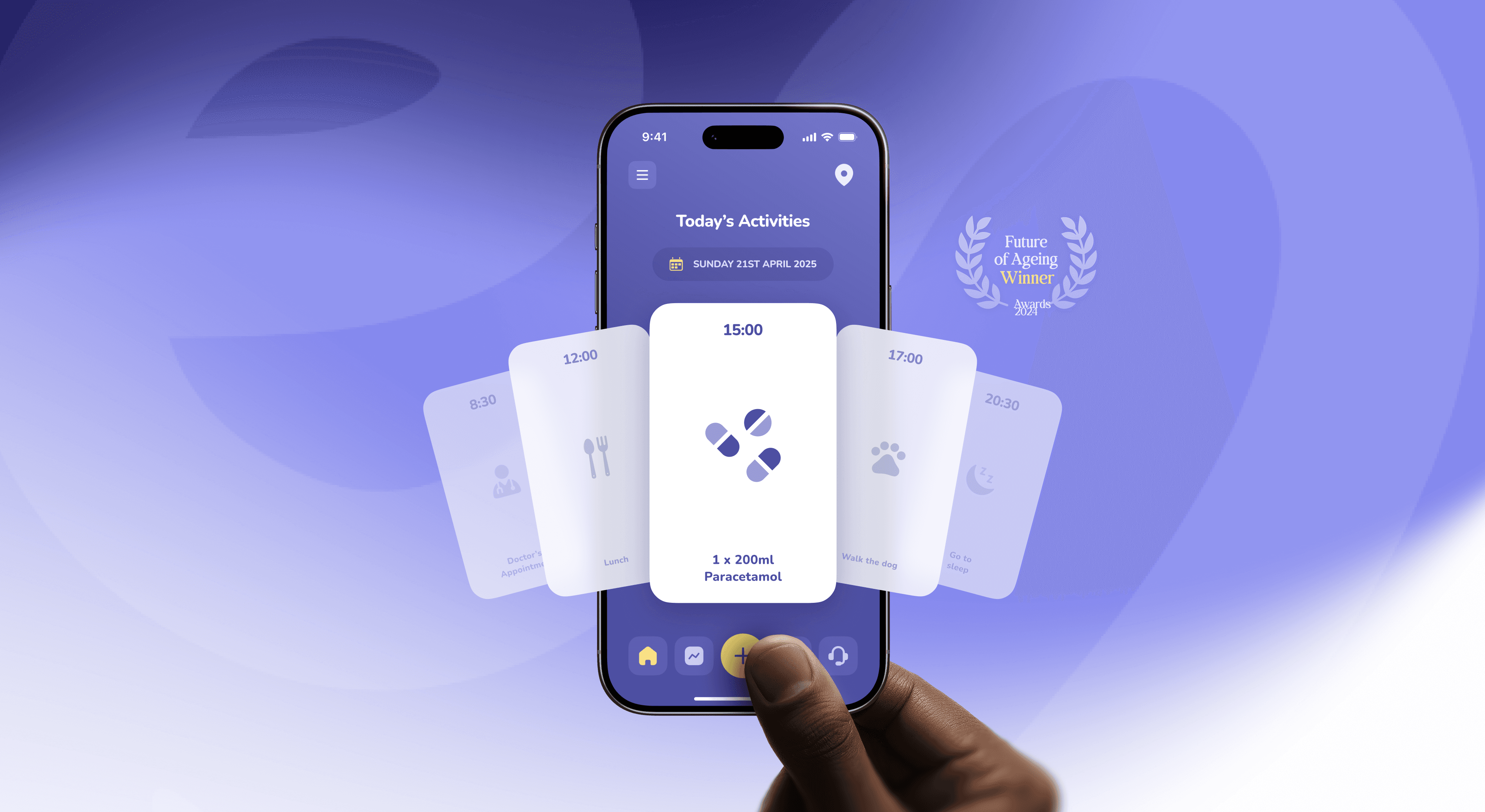
Designing tech for older adults that doesn’t feel like a pill box
How to design apps for older adults that are accessible and dignified, not patronising. Principles, a swap table and lessons from the Elli Cares app.
8 Dec 2026
Energy investors read a climate deck differently. What they look at first: technology readiness, unit economics, real installs and impact with a method.

Energy investors look first at whether your technology, your unit economics and your route to deployment tell the same story. Say how ready the technology really is, show cost per unit today and at volume, explain who pays for the first installations, and prove it works outside the lab. Put climate impact after the business, never instead of it.
Money for the energy transition has never been bigger. BloombergNEF counted a record US$2.3 trillion invested in 2025, up 8% on the year before. In the same report, venture funding for climate tech startups fell for the third year in a row.
So the money is moving. Just not towards slides with a photo of Earth from space.
Most of that capital goes into deploying things that already work: grids, renewables, electric transport. A startup deck has to show an investor where it sits between the lab and that pile of proven infrastructure, and how fast it can move along.
At Dtail Studio, a Barcelona design studio working with HealthTech and renewable energy startups, we’ve seen this from the brand side with Cubee, an energy management startup whose identity had to work as hard in an investor deck as on a box in someone’s garage (case study). We already have posts on what investors want to see at every stage and whether your deck is killing your raise. This one is only about what’s different in energy.
How ready your technology is, and who carries the risk until it’s proven. Everything else in the deck gets read through that lens.
A software platform for installers, a new battery chemistry and a solar project developer can all call themselves climate tech. They are three different investments. One is a SaaS company with an energy customer. One is a hardware science bet. One is infrastructure finance. If your deck doesn’t make it obvious in the first two slides which one you are, the investor spends the meeting working it out instead of listening.
Because it decides which investor you should be talking to at all. The International Energy Agency estimates that around 35% of the emissions reductions needed by 2050 in its net zero scenario come from technologies still under development. Investors know a lot of good ideas sit in that bucket. They also know how long it takes to get out of it.
Be precise about where you are: lab prototype, field pilot, first commercial units or scaling. Name the next milestone that reduces risk and what it costs to get there. Overstating readiness is the fastest way to lose a technical investor, because their first diligence call is with an engineer who will ask to see the test data.
As a curve, with the assumptions written on it. Show what one unit costs you today, what it costs at the volume you are raising for, and what has to be true for that drop to happen: supplier pricing, manufacturing yield, install time.
Then show the customer’s side in their currency. Payback in years or savings per month, not kilowatt-hours. Most homeowners and many business buyers don’t think in energy units, which we wrote about in nobody understands a kilowatt-hour.
If the economics only work with a subsidy, say so. Show the case with and without it. Policy changes. A deck that collapses when one incentive disappears is a deck about the incentive.
Things installed and running in the real world. In software, a waitlist can be traction. In energy, investors look for units deployed, sites live, energy managed and partners who install or sell your product.
A single concrete number beats a slide of logos. Cubee, for example, has passed 2,000 installations. That reads instantly: real hardware, real homes, real installers who chose it. Pilots, utility letters of intent and installer pipeline count too, labelled honestly.
After the business case, and only with a method behind it. Impact matters to energy investors, but most of them back companies that win on cost, reliability or convenience and happen to cut emissions. Impact is the reason the market exists. It isn’t the reason your company wins.
Vague claims also carry a new risk. Since 27 September 2026, EU rules under Directive 2024/825 ban generic environmental claims in consumer marketing unless a company can prove recognised excellent environmental performance, and ban claims of neutral or reduced impact based on offsetting. A deck is not consumer advertising, but investors read it knowing your website and packaging will have to follow those rules. If your marketing can’t say “eco-friendly” without evidence, your deck shouldn’t lean on it either.
Make physical things easy to picture. Energy products live inside systems people can’t see: grids, inverters, meters, tariffs. Your job is to show where your product sits in that system and what changes because it’s there.
One system diagram, early. Draw the flow of energy and money, and where your product touches each. BloombergNEF counted US$483 billion of grid investment in 2025. Investors want to see where you plug in.
Photos of real installs over renders. A render says “we’ve designed it”. A photo says “someone has it”.
A technical appendix. Keep the main deck short and put test data, certifications and the bill of materials behind it.
A brand that survives the data room. Your deck, website, product and datasheets will be opened side by side. If they look like four companies, that is a question about your team. We cover this in how to brand a clean energy startup.
What kind of company is this? Where you answer it: Slide 1 or 2. Weak: “Climate tech platform”. Strong: “Hardware plus software for home energy, sold through installers”.
How proven is the technology? Where you answer it: Readiness slide. Weak: “Patent pending”. Strong: Stage, test data and the next milestone with its cost.
Can it get cheap enough? Where you answer it: Unit economics. Weak: One price, no assumptions. Strong: Cost today and at volume, with the drivers named.
Does anyone use it? Where you answer it: Traction. Weak: Logos and a waitlist. Strong: Units installed, sites live, partners signed.
Who pays for the first units? Where you answer it: Go-to-market. Weak: “We’ll partner with utilities”. Strong: Named channel, sales cycle and who carries the capital cost.
What if policy changes? Where you answer it: Economics or risk. Weak: Not mentioned. Strong: Case shown with and without incentives.
Is the impact real? Where you answer it: After the business. Weak: A planet and a big tonne figure. Strong: A method and a source for every number.
Cubee had strong technology and a fragmented visual presence. The brand needed to feel approachable without losing credibility, and it had to scale across decks, digital products and physical hardware.
Between January and April 2024, we built Cubee’s brand strategy, identity, packaging and product design. The core is a geometric symbol system based on energy flow and connection, a bold logomark that balances precision with warmth, and grid logic and typography that make complex information feel simple. It was designed from the start to hold together on a pitch deck, a phone screen and a physical unit. Cubee has since passed 2,000 installations.
“Dtail helped us launch with a brand and product that stood out instantly.” David Vondracek, Founder and CEO, Cubee
Over 16+ years and 300+ projects, our clients have raised EUR 380M. The founders raised it, not the slides. What good design does is stop the slides from getting in the way.
With the business. Open with the problem your customer pays to solve and what kind of company you are. Bring impact in after the economics, with a method behind every figure.
Be specific. “Field pilot with 40 units” sounds further along than “revolutionary technology”, even if it’s earlier. Name the next milestone and the cost to reach it. (The 40 units here is illustrative.)
Photos of real installations wherever you have them. Use renders for what doesn’t exist yet, and label them as renders.
Yes, but show the case without them too. Investors want to know the business survives a policy change.
Print your deck and cover every slide that talks about the planet, plus every use of “green”, “clean” and “sustainable”. Read what’s left. If the business still makes sense, you have a climate company. If it doesn’t, you have a cause with a logo, and an investor will notice faster than you’d like.
Raising for an energy startup and want the deck to look as solid as the tech? Tell us about it.
About the author. Slavena Vasileva is Brand Strategist and Partner at Dtail Studio, a senior brand and product design studio in Barcelona working with HealthTech and renewable energy startups. 16+ years, 300+ projects, EUR 380M raised by clients.
Sources: BloombergNEF Energy Transition Investment Trends 2026 · IEA Net Zero Roadmap, 2023 update · Directive (EU) 2024/825 on EUR-Lex · Cubee case study
How to design apps for older adults that are accessible and dignified, not patronising. Principles, a swap table and lessons from the Elli Cares app.

Patients want independence, carers want reassurance. How to design one health app that serves both without turning care into surveillance.
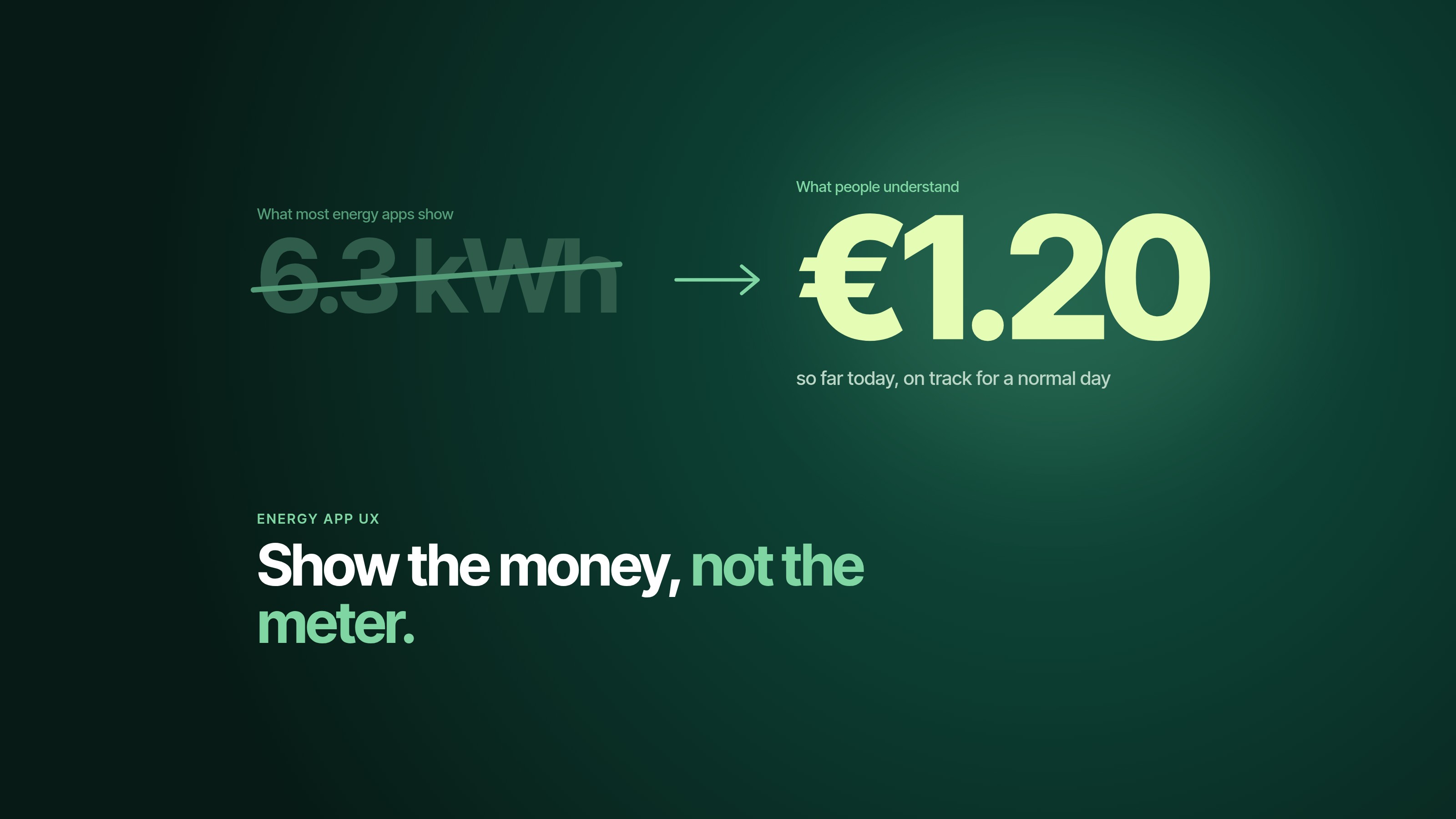
People underestimate their energy use by 2.8 times. Six UX patterns that make energy management apps clear, useful and worth opening twice.